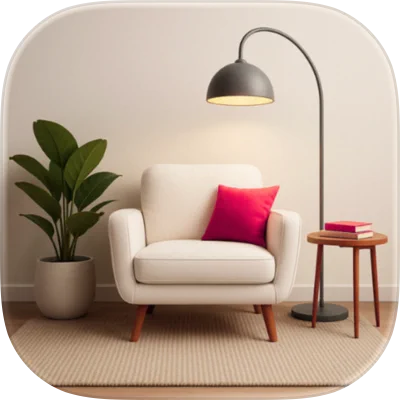
Interior design moves in cycles — what feels fresh one season becomes ubiquitous the next. But 2025 has a clear direction: warmth over cool, nature over synthetic, comfort over performance. Below are the 10 trends shaping residential interiors this year, from the already-dominant to the ones just reaching mainstream adoption.
Biophilic Design
Nature isn't the accent anymore — it's the foundation
Biophilic design is the single fastest-growing direction in residential interiors. The premise is simple: humans evolved in nature, and spaces that reconnect us to it produce measurable reductions in stress and improvements in focus. What that looks like in practice has matured significantly beyond "add some plants."
2025 biophilic interiors incorporate living walls, water features, natural stone textures, exposed timber, linen and cotton textiles, and maximum natural light. The color palette follows: warm greens, clay, stone, and earthy beige form the base. Synthetic materials are minimized or hidden.
On the tech side, AI room design tools have made visualizing a full biophilic transformation accessible — you can see how a wall of plants, a natural stone accent wall, or a raw timber ceiling would look in your actual room before committing to a renovation.
Japandi
The hybrid that won the decade
Japandi — Japanese-Scandinavian design — has moved from niche trend to mainstream staple over the past three years, and 2025 shows no sign of slowing. It's the perfect fusion: Japanese wabi-sabi philosophy (finding beauty in imperfection, embracing natural aging) meets Scandinavian hygge (warmth, coziness, functional beauty).
The resulting aesthetic uses clean lines and minimal clutter from Scandinavia, and warm natural materials, low furniture profiles, and earthy neutrals from Japanese design. The palette is warm: greige, charcoal, warm white, and muted sage — never stark or cold.
What makes Japandi endure is utility. Every object earns its place. Furniture is functional, storage is invisible, and the overall effect is a space that feels simultaneously simple and deeply considered.
Warm Earth Tones
Gray is over. Warmth is in.
The all-gray decade of interiors is definitively behind us. 2025 is the year of terracotta, warm beige, clay, burnt sienna, deep olive, and dusty sage. These colors feel grounded and timeless in a way that cool grays never quite managed.
Warm neutrals also work across styles — they appear in Japandi, Farmhouse, Maximalist, and Boho interiors alike. The warm-neutral shift reflects a broader cultural move toward comfort and coziness (the so-called "cozy culture") that accelerated post-pandemic.
For walls specifically, limewash and Venetian plaster finishes have replaced flat paint as the aspirational wall treatment. They create depth and texture while staying within a warm neutral palette.
Curved & Organic Furniture
The right angle is losing its grip
Sofas with rounded backs, oval dining tables, arched mirrors, kidney-shaped coffee tables, scalloped headboards — curved and organic furniture shapes have overtaken the sharp-edged modernist grid. It's a reaction to a decade of hard-angled interiors, and it creates spaces that feel more human and welcoming.
The curved furniture trend pairs well with earth tones (a rounded terracotta sofa is a signature 2025 look) and with Japandi's organic approach to form. It also fits naturally into the maximalist revival — layered curves, rich textures, and warm tones are increasingly appearing together.
Practically, curved pieces work particularly well in smaller rooms. A round dining table seats the same number of people as a rectangular one of the same square footage, but it opens the center of the room and improves flow significantly.
Maximalism Revival
More is more — but thoughtfully
"Less is more" had its decade. 2025 is pushing back. Maximalism is returning — not as clutter, but as richness. More color, more pattern, more texture, more collected objects that tell a story. The key distinction between maximalism done well and simply messy interiors is intentionality.
The maximalism trend overlaps with the "dopamine décor" movement — the idea that interiors should be designed for joy. Bold jewel tones (emerald, sapphire, burnt orange), layered rugs, mixed pattern textiles, gallery walls, and curated collections of meaningful objects are all signatures.
On social media — particularly TikTok and Pinterest — maximalist "grandmillennial" and "cottagecore" aesthetics have driven massive engagement, pulling a new generation toward more decorative, eclectic interiors.
Sustainable & Vintage
The most eco-friendly piece is the one you already own
Sustainability in interior design in 2025 has shifted from "using sustainable materials" to something more fundamental: buy less, keep longer, and source secondhand first. The vintage and antique furniture market has exploded as a direct result — younger homeowners are increasingly bypassing IKEA for thrift stores, estate sales, and vintage platforms.
This shift produces interiors that mix eras deliberately — a Victorian settee alongside a mid-century credenza alongside a contemporary pendant light. The eclecticism is the point. Every piece has a story.
From a production standpoint, sustainable materials (reclaimed wood, recycled glass, natural fiber textiles) are increasingly mainstream rather than premium niche. Cork flooring, bamboo furniture, and linen upholstery have moved into mid-market price points.
Multi-Functional Spaces
Every room has two jobs now
The home office isn't going back to being a guest bedroom. Four years after the remote work shift, multi-functionality has become a permanent interior design requirement. Bedrooms must accommodate work. Living rooms become yoga studios. Dining rooms double as meeting rooms.
The design challenge is achieving multi-functionality without visual chaos. The solutions trending in 2025 include built-in storage that conceals work equipment, fold-away desks embedded in bookshelves, acoustic panels that define zones without walls, and furniture on wheels or casters that reconfigures in minutes.
Room dividers — decorative screens, tall bookshelves, hanging curtains, and slatted partitions — have had a major resurgence precisely because they enable multi-functional zones within open-plan layouts.
Quiet Luxury
Expensive-looking, not expensive-feeling
"Quiet luxury" is the interior design counterpart to the fashion movement of the same name: understated materials, impeccable quality, no logos, no flash. Think cashmere throws, marble with visible veining, brushed brass hardware, architectural lighting, and neutral palettes built from expensive-feeling textures rather than expensive colors.
The quiet luxury look is driven largely by the same aesthetic that dominates high-end hotel design — which has itself become a reference point for aspirational home interiors. Linen drapery from floor to ceiling, integrated appliances, handled cabinet pulls with weight and resistance — small details that signal quality without announcing it.
For homeowners working within a budget, AI room design is an effective tool for planning a quiet luxury room — you can visualize the full layout, palette, and material mix before spending on a single piece.
Coastal & Relaxed Interiors
The vibe shift toward comfort
The "coastal grandmother" aesthetic — relaxed, sun-bleached, comfortable, and unpretentious — has become a dominant design mood in 2025. It's less about literal coastal elements (anchors, rope, nautical stripes) and more about the feeling of a well-worn beach house: linen slipcovers, weathered wood, sheer curtains, natural fiber rugs, and a palette of warm whites and seafoam.
The broader coastal trend reflects the same comfort-first values as the earth-tone and cozy-culture movements. Interiors feel more lived-in, more personal, and less like a magazine shoot. Perfectly matched sets are out; curated mismatch is in.
Invisible Technology
Smart homes, visible humanity
Smart home technology has matured to the point where the new design challenge isn't integration — it's concealment. The 2025 home hides its technology: speakers embedded in ceilings, TVs that become art when off, charging surfaces built into nightstands, and lighting control systems with no visible switches.
The design philosophy is that technology should serve the space, not dominate it. A room designed around a large flat-screen TV will always look like it's designed around a large flat-screen TV. The trend is toward framing, concealing, or eliminating screens in favor of projectors, retractable setups, and art TVs.
The common thread: intentionality
Across all 10 trends, the common thread is a move toward more intentional interiors — spaces where every object, material, and color choice has been considered. Whether that manifests as Japandi minimalism or maximalist curation, the result is a room that feels designed rather than assembled.
The good news: you don't need a decorator to explore any of these directions. Upload a photo of your room and AI Room Decor will show you exactly how it would look redesigned in any style — in 10 seconds, free.
Try Free — See Your Room Redesigned