Retro Interior Design
Groovy, bold, and intentionally nostalgic.
Retro interior design celebrates the distinctive looks of three defining decades — the 1960s, 1970s, and 1980s. Each era has a distinct character: the 60s brought space-age optimism, mod patterns, and pop art colours; the 70s swung toward earthy warmth, shag carpets, macramé, and wood panelling; the 80s embraced excess, geometric patterns, and high-gloss surfaces. What unites them is a rejection of timidity — retro rooms have personality.
Free to try · No credit card · 3 free designs
What defines Retro design?
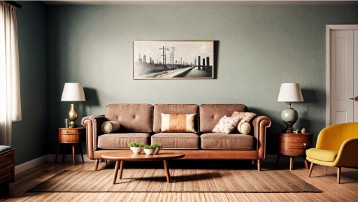
- Avocado green, harvest gold, or burnt orange as primary colours
- Shag rugs or vintage geometric area rugs
- Sunburst mirrors and starburst wall clocks
- Wood panelling or faux wood-grain wallpaper
- Low-slung, curved furniture with tapered legs
- Bold geometric or floral wallpaper patterns
- Macramé wall hangings and woven basket decor
- Vinyl record displays and retro hi-fi equipment
Color palette
Works best in
See your room in Retro style — free
Upload a photo. Select Retro. Get 4 AI-generated redesigns in under 10 seconds. No design skills needed.
Try It Free →3 free designs every month · No credit card
Retro design — common questions
What colours define retro interior design?
The 1970s palette is the most recognised: avocado green, harvest gold, burnt orange, warm brown, and mustard yellow. The 1960s leaned into bold primary accents (red, yellow, cobalt) on white bases. The 1980s used high-contrast combinations — black and white, teal and pink, or warm grey with pastels. Picking an era helps keep the look cohesive.
What is the difference between retro and vintage interior design?
Retro means inspired by a past era but made today — a new avocado-green appliance is retro. Vintage means actually from that era — an original 1972 avocado refrigerator is vintage. In practice, the terms are used interchangeably in interior design, but vintage rooms tend to use authentic period pieces while retro rooms mix contemporary furniture with period-inspired colours and patterns.
How do I do retro without it looking dated?
Anchor one or two retro elements in an otherwise contemporary space. A single avocado-green velvet sofa in a neutral room reads as intentional and sophisticated; an entire room in harvest gold and wood panelling reads as unrenovated. Proportion and curation are everything.
What furniture is most associated with 1970s interior design?
Conversation pits, low-profile sectional sofas, wicker peacock chairs, tulip tables, mushroom lamps, and modular shelving units like the String shelf. Materials skewed tactile — corduroy, velvet, rattan, and suede were all dominant. Many of these have been revived in contemporary design, which is why 70s-inspired interiors feel current rather than merely nostalgic.