
Understanding the Basics of Kitchen Design
Embarking on the journey of kitchen design can initially seem daunting, particularly if you're new to interior design. However, with a few guiding principles, you can transform your kitchen into a functional and beautiful space. Whether you're renovating or starting from scratch, understanding the basic components of kitchen design is crucial for creating a space that suits your needs.
Key Elements of a Functional Kitchen Layout
Every successful kitchen design starts with an efficient layout. The key is to ensure that your kitchen's floor plan reduces unnecessary movement and boosts efficiency. Here's where the kitchen "work triangle" comes into play: a clear path between your sink, refrigerator, and stove. Maintaining this principle allows you to easily navigate between tasks without obstacles. When you're designing, consider these three common kitchen layouts:
- U-Shaped Kitchen: This layout surrounds the cook on three sides, offering plenty of counter space and cabinetry.
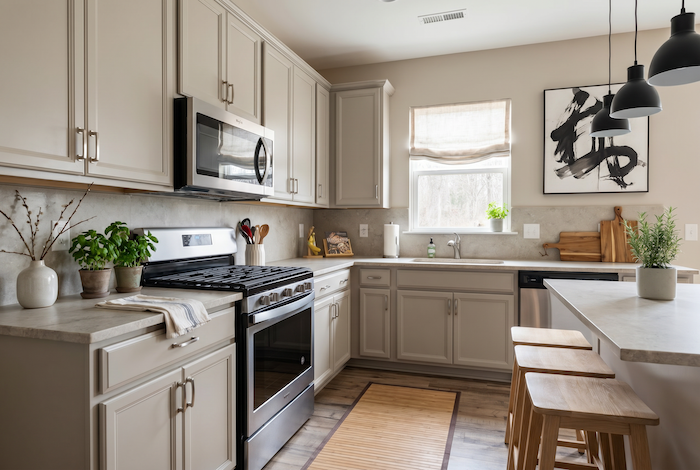
- L-Shaped Kitchen: Perfect for open concept homes, this layout uses two adjacent walls, maximizing open space and allowing for a more fluid living area.
- Galley Kitchen: Ideal for smaller spaces, this design features two parallel walls with counters and storage. It's compact and efficient, minimizing the movement between the kitchen's core areas.
Choosing the Right Materials and Finishes
The materials and finishes you choose for your kitchen not only enhance its aesthetic appeal but also its usability and longevity. Here are some considerations to keep in mind:
- Countertops: Options like granite, quartz, and solid surface materials offer durability and come in various styles to match any design.
- Cabinetry: Choose durable and easy-to-clean materials such as laminate or lacquer for a modern look, or go for natural wood for a classic feel.
- Flooring: Consider materials that can withstand high foot traffic and spills, such as tile or hardwood.
Incorporating Technology into Your Kitchen Design
Incorporating technology into your kitchen design can enhance both functionality and convenience. Smart appliances, like refrigerators with touch screens or ovens that can be controlled via smartphone apps, can simplify your cooking and entertainment experiences. For those eager to infuse AI into their home design, using AI-based tools can be beneficial. Explore how to use AI room decorator tools to revolutionize your kitchen.
Accessorizing Your Kitchen
Once the major elements are in place, it's time to accessorize. The right accessories can personalize your space and make it more inviting. Here are some accessories to consider:
- Lighting: Install a combination of ambient, task, and accent lighting to create a warm and functional atmosphere.
- Storage Solutions: Maximize storage with deep drawers, pull-out shelves, and an organized pantry system.
- Decorative Elements: Add personality through color schemes, backsplash designs, and unique hardware.
To dive deeper into creating an aesthetic kitchen space, check out our guide on exploring free AI home design tools that can help you visualize your ideal kitchen setup.
Planning for the Future
Lastly, when designing your kitchen, consider your future needs. Ask yourself how your kitchen will need to evolve over time. For instance, if you anticipate a growing family or a lot of entertaining, plan for more seating and dining space.
Final Thoughts
Designing a kitchen involves careful thought and attention to detail, but it doesn't need to be overwhelming. By following these guidelines and leveraging tools like the offerings at AiRoomDecor, you can transform your kitchen into a hub of innovation and comfort. For further insights on using AI in home design, check out our beginner's guide to getting started with a free AI interior design app.