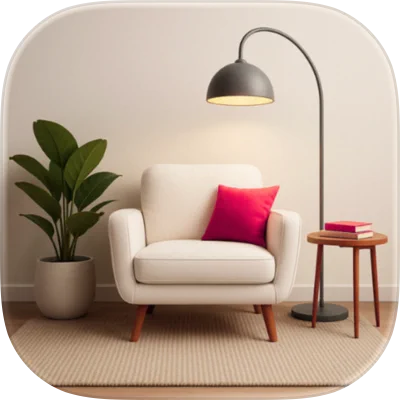
Forty years of research in environmental psychology has established a consistent finding: humans feel measurably better in spaces with natural elements. Stress is reduced, focus is improved, and perceived comfort increases — not marginally, but significantly. Interior design has always known this intuitively; biophilic design gave it a name and a framework. Below is a practical guide to applying that framework in any room.
Wood
The warmest natural material
Wood is the most universally adopted natural element in interior design — no other material offers the same warmth, textural variety, and visual comfort. In 2025, the dominant wood aesthetic has shifted away from dark espresso and mahogany tones toward lighter, more open-grained species: white oak, ash, and pine. These lighter tones work across styles, from Scandinavian to contemporary, without the visual weight of darker woods.
Beyond furniture, wood is gaining ground on walls (limewashed timber panels, shiplap, or horizontal plank cladding), ceilings (exposed beams, tongue-and-groove), and floors (wider planks with lighter finishes). Each application adds a layer of natural warmth that paint and synthetic materials cannot replicate.
For those working with a modest budget, rattan and bamboo are the accessible entry points into wood-family naturalism — both are warm, lightweight, and produce strong visual impact in chair backs, pendant lights, and shelf baskets at a fraction of solid timber prices.
Practical tip
Mix wood species and tones deliberately — light oak floors with walnut furniture works because the contrast is intentional. Avoid matching all woods to the same tone, which reads as flat.
Stone
Permanence and geological beauty
Natural stone is the most aspirational natural material in interior design — and increasingly accessible at multiple price points. Marble remains the benchmark luxury stone: Calacatta and Statuario are prized for their dramatic veining; Nero Marquina for its deep black-and-white contrast. But the broader stone family includes slate, travertine, limestone, granite, and quartzite, each with its own colour range, pattern, and character.
In 2025, travertine has had a significant moment — its warm cream-to-beige tones, distinctive pitting, and Mediterranean character fit perfectly with the earth-tone palette that dominates residential interiors. Travertine tiles on a bathroom floor, a travertine-top coffee table, or travertine-look wallpaper (for those without the budget for stone) all achieve this.
For walls, stone cladding and thin-stone veneer have made the look achievable beyond premium projects. Limewash paint finishes create a stone-adjacent texture on any drywall surface at paint costs.
Practical tip
If budget rules out natural stone, look for high-quality porcelain tile with stone printing — the texture variation in modern inkjet-printed tiles is genuinely convincing at a fraction of stone prices.
Plants
The fastest transformation in interior design
No other intervention transforms a room faster or more affordably than plants. They bring colour, movement (leaves shift with air currents), biological activity, and — for many species — measurable air quality improvements. Most importantly, they create the sense of a living room rather than a furnished one.
The dominant plant aesthetic in 2025 has moved beyond the single potted plant to layered installations: trailing plants from shelves and window sills, floor-level plants in statement pots, hanging planters at varying heights, and occasional living wall panels as feature elements. The effect is a room in which nature is not a guest but part of the architecture.
From a care perspective, the most common mistake is choosing plants for appearance over suitability. Low-light spaces need pothos, snake plants, ZZ plants, or cast iron plants — not the trailing monsteras that photograph beautifully but require bright indirect light. Match the plant to the light conditions in the specific spot it will occupy.
Practical tip
Group plants in odd numbers — 3 or 5 pots together create more visual impact than the same plants spread individually around a room. Vary height and pot material (terracotta, ceramic, woven) within the grouping.
Natural Light
The element that amplifies everything else
Natural light is the multiplier for every other natural element in a room. Stone looks geological in natural light; it looks flat under artificial light. Wood grain comes alive with raking daylight; it looks uniform under overhead bulbs. Plants need natural light to thrive. Every investment in natural elements is amplified by maximising the natural light that illuminates them.
Practical tactics for maximising natural light: treat windows as architectural features rather than holes that need covering (consider sheer linen panels rather than blackout curtains in principal rooms), use mirrors opposite windows to double the light bouncing through a space, keep windowsills clear, and choose reflective or light-toned finishes for surfaces near windows.
For rooms with limited natural light, colour temperature matters significantly. Warm-white bulbs (2700K–3000K) approximate natural evening light and suit living areas and bedrooms. Daylight bulbs (5000K–6500K) simulate noon sunlight and work better in workspaces and bathrooms.
Practical tip
Before adding any artificial lighting, maximise natural light first. Pull curtains back further than feels natural, clean windows, and remove anything sitting on the windowsill that blocks light.
Natural Textiles
Texture you can feel
Natural textiles — linen, cotton, wool, jute, sisal, and leather — bring tactile warmth that synthetic fabrics cannot replicate. The difference is felt rather than seen: linen wrinkles softly in a way that polyester does not; wool has a depth of texture that acrylic mimics but never matches; a jute rug feels substantial underfoot where synthetic equivalents feel hollow.
The move toward natural textiles aligns with the broader sustainability shift in interior design — these materials are biodegradable, often more durable than synthetics, and improve with age in a way that polyester blends never do. Linen softens with every wash. Leather develops patina. Wool wool rugs compact and consolidate over years of use.
For upholstery specifically: linen and cotton-linen blends have overtaken polyester as the mid-market standard for sofa upholstery. They are more expensive and less stain-resistant, but they look and feel significantly better, and they are a natural fit for earth-tone and natural-materials interiors.
Practical tip
Introduce natural textiles at low cost with cushion covers and throws — a set of linen cushion covers costs under $40 and immediately changes the feel of a sofa. Start there before committing to reupholstery.
Water Features
Sound and movement as design elements
Water is the most powerful of the five biophilic elements and the least used in residential interiors. The sound of moving water has a measurable effect on stress reduction — it masks urban noise, creates a consistent ambient sonic environment, and has associations with natural settings that trigger relaxation responses.
Practical water features for home interiors range from tabletop fountains ($30–$200) to wall-mounted indoor water walls to full integrated indoor/outdoor water channels in open-plan spaces. Even without a functioning water feature, water imagery — photography of water, reflective surfaces that move like water, vessels filled with water and floating botanicals — brings the psychological associations of the element.
In bathrooms specifically, the water element is naturally present; the design goal is to amplify it. Natural stone surfaces, warm-white lighting, and plant life around a quality bathtub or rainfall shower head turns the functional water encounter into a fully biophilic experience.
Practical tip
A simple tabletop fountain near a home office desk provides consistent white noise that masks distracting background sounds — the productivity benefit alone justifies the cost, independent of any aesthetic consideration.
Where to start
The most common mistake in applying natural elements is trying to do everything at once. Pick one element — almost certainly plants — and introduce it with intention: three different sizes, varied containers, placed at different heights. Live with that for a month. Then consider which other element would amplify it most in your specific space.
If you want to visualise how natural materials would look in your actual room before spending on furniture or renovation, upload a photo to AI Room Decor. The biophilic, Scandinavian, and Japandi styles in particular showcase natural elements well and will show you the direction clearly before you commit.
Try Free — See Natural Design in Your Room