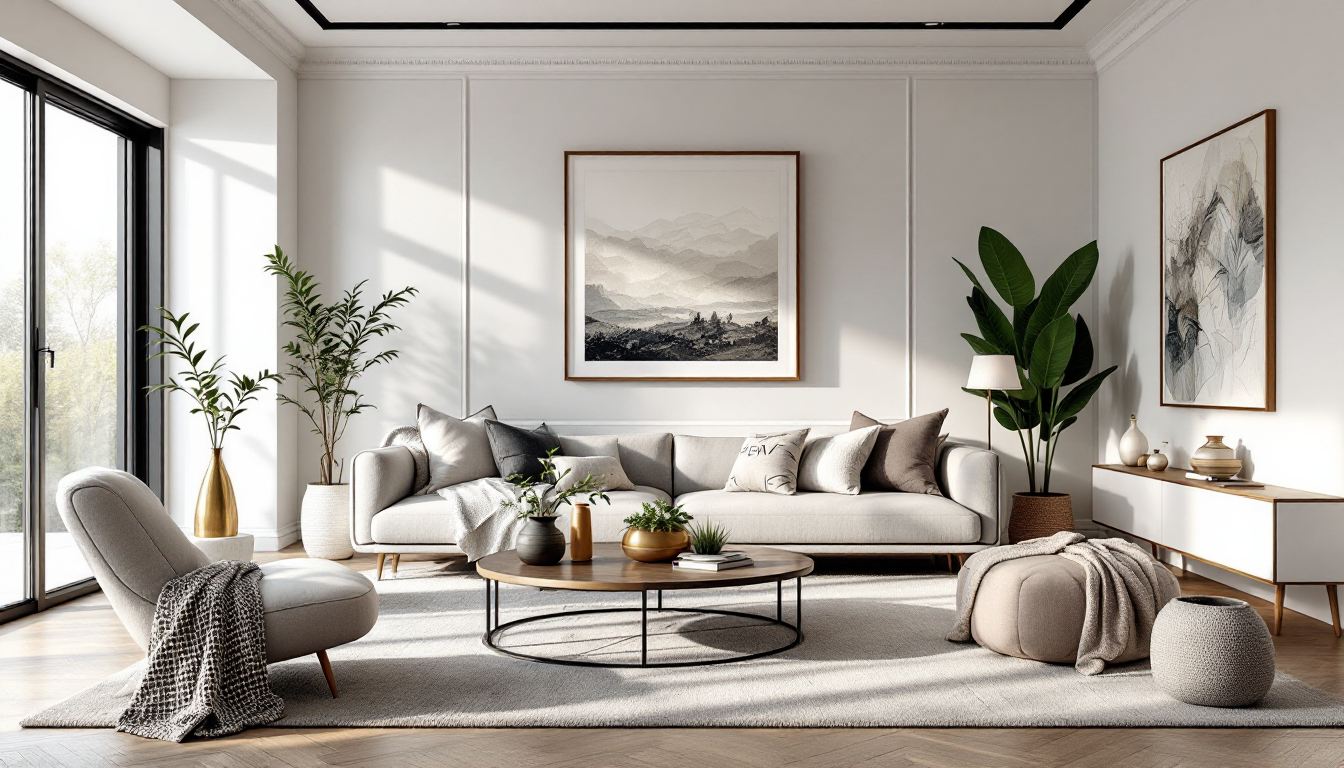
Introduction to Living Room Design
Designing a living room can seem daunting, especially if you're starting from scratch. However, with the right guidance and tools, creating a comfortable and stylish space becomes manageable and even enjoyable. This guide will equip you with essential living room design ideas, focusing on layout, color schemes, furniture placement, and decor tips.
Step 1: Plan Your Layout
The foundation of a well-designed living room lies in its layout. Start by assessing the space you have, including windows, doors, and any fixed features like a fireplace. Consider how you want to use the space—do you need it to be a cozy family area, or will it serve as an entertainment space for guests?
- Functional Zones: Define areas for different activities. For example, set aside a reading nook, a conversation area, and a space for multimedia viewing.
- Flow and Accessibility: Ensure clear pathways to avoid overcrowding and retain easy access throughout the room.
For more insights on creating an efficient space, explore A Beginner's Guide to Room Design: Transforming Your Space Step-by-Step.
Step 2: Choose Your Color Scheme
Color plays a pivotal role in setting the mood and style of your living room. Beginners are advised to start with a neutral palette as a base, adding pops of color through accessories and decor.
- Neutral Tones: Whites, beiges, and greys create a calming backdrop.
- Accent Colors: Introduce colors like teal, mustard, or coral through cushions, throws, or artwork.
Using an AI design app can assist in visualizing different color schemes together with your existing decor. Visit the AI Room Decor homepage to explore this feature.
Step 3: Select and Arrange Your Furniture
Furniture is crucial in shaping your living room. Ensure each piece aligns with your intended use for the space and complements your chosen style.
Here's a simple approach to furniture arrangement:
- Sofa as a Focal Point: Position it centrally or against a wall, depending on the room's layout.
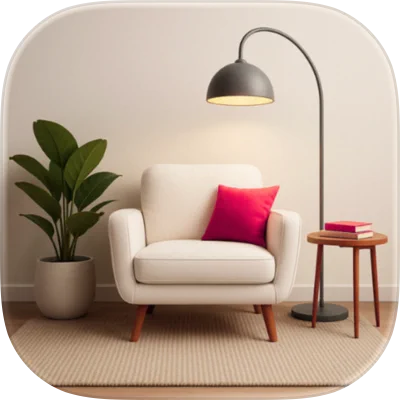
- Complementary Seating: Add armchairs or a loveseat to balance the area.
- Versatile Tables: Consider a coffee table that offers storage solutions without overcrowding.
For detailed advice on furniture placement, check out our article on Exploring AI Furniture Placement Tools: A Buyer’s Guide.
Step 4: Add Finishing Touches with Decor
Once the primary elements are arranged, personalize your living room with decor items that reflect your personality.
- Textiles: Choose cushions, rugs, and curtains that add texture and warmth.
- Artwork: Display pieces that speak to your tastes, arranged in a gallery style or as standalone statements.
- Lighting: Incorporate layers of lighting like floor lamps, table lamps, and wall sconces to create ambiance.
Embrace Technology in Your Design Process
Incorporating technology, such as AI design tools, can significantly enhance your creativity and efficiency. These tools help visualize different decor styles and layouts before making any purchases. Visit our guide on Top AI Tools to Enhance Your Living Room Design Ideas: A Practical Guide for more information.
Conclusion
Embarking on a living room design project can be a fulfilling experience when approached with the right steps and tools. By understanding the basics of layout, color, furniture, and decor, you're well on your way to creating a space that is both functional and welcoming. Remember, the aim is to create a living room that reflects your personality while being practical for your lifestyle.